AI playbook
How companies get going with AI. Crawl, walk, run.
A reading guide built on what we see in the companies that succeed: where to start, what to do at each stage, and how you know you are ready for the next one.
By Henosia. November 2026. About 12 minutes to read.
Where are you today?
Pick the description that fits best, and start reading there. Most companies are further back than they think, and that is fine.
Before you start
Getting value from AI is mostly not about AI.
of Danish companies with 10+ employees used AI in January 2026, up from 42% a year earlier.
Danmarks Statistik, ITAV28still struggle to turn AI investments into results. Only 7.5% are truly ahead.
BCG, 2026 Applied AI Indexof office professionals at large companies have used AI tools at work they believed were not allowed.
PagerDuty, 2026 Shadow AI SurveyAlmost everyone uses AI. Few have changed how they work. The brakes are workflows that stay the same, rules that lag, skills that stay with a few people, and data that isn't ready.
Stage 1 of 3
Crawl. Get started safely.
The goal: one real problem solved by the people who have it, in a safe place, and used by their colleagues.
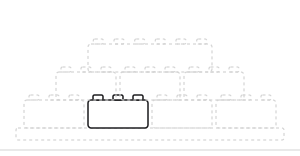
What it looks like
- People use ChatGPT, Claude or Copilot for text and ideas, often on private accounts.
- A few enthusiasts build things on their own. Nobody else knows about it.
- Leadership talks about AI, but nobody owns it.
- IT is unsure what to allow, or everyone is waiting for an AI policy.
What to do
Leadership takes ownership
AI is not an IT project. It changes how work is divided, who decides and what gets dropped, and only leadership can make those calls. Put it on the leadership agenda, and have each leader build one small thing with AI themselves. You can't lead what you haven't tried.
Set a narrow mandate instead of waiting for the perfect policy
Decide what people may do now: which tools, which data and where things may be shared. Test data is fine to begin with. Widen the mandate as experience grows.
Pick a problem, not a technology
Don't ask what you could build with AI. Ask which manual step annoys people every week: numbers copied between systems, the spreadsheet a whole team lives in, the status meeting that could have been a post.
Choose 2–3 builders in one department
People who own the problem, with someone technical next to them. The expert corrects the solution while it is being built, instead of writing a requirement and waiting.
Give them time and a safe place
A build day or hackathon in working hours, not on top of the calendar. And a private sandbox where nothing goes live by accident.
You're ready to walk when
- One app is used by colleagues every week
- 2–3 people can build and change it
- Someone outside the group asks for the next one
- You can say what it saves
Stage 2 of 3
Walk. Make it part of the work.
The goal: turn the first success into a repeatable way of working, with an owner and a home for every app.
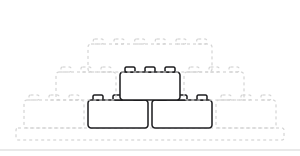
What it looks like
- A few apps are in use in one or two departments.
- Other teams ask for the same, or start building their own.
- New questions: which data may we use, where should apps run, who owns them?
- Some apps live on private accounts or are passed around as links and files.
What to do
Get your data straight
Map your core objects, such as customer, order, product and stock, and agree what each term means across departments. Start with read-only access. Writing back to core systems comes later. AI on top of a mess only makes a faster mess.
Give every app an owner and a home
Company sign-in, no public links, no files passed around. An approved place to publish is what keeps shadow AI down, because people stop needing a workaround.
Write the shared rules once
House rules, templates and instructions, so every builder starts the same way. A recipe gives the same result whoever cooks, and when one person improves it, everyone gets the improvement.
Plan before you build
Describe who will use it, which data it needs and which rules apply. A clear plan beats a long prompt.
Build many small apps, not one big one
Small tools that each solve one thing are easier to own, change and defend than one platform that does everything.
Measure, and show it
Time saved, errors avoided, decisions made faster. Show the first apps across the company. Nothing spreads like a colleague's tool.
Repeat in the next department
Again 2–3 builders, never one. One tool in production before the next one starts.
You're ready to run when
- Three or more apps are in daily use
- People build in more than one department
- IT knows every app and who owns it
- You can put a number on the value
Stage 3 of 3
Run. Scale across the company.
The goal: an AI-enabled company, where everyone who knows a problem can build the fix and every app runs under the same rules.
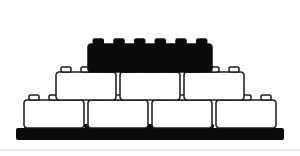
What it looks like
- Building is part of the work in several departments.
- Apps reach core systems such as ERP and CRM.
- There are more ideas than leadership can fund.
- Teams risk building the same thing twice.
What to do
Make governance the accelerator
Default yes, with rules that make yes safe. The question is never "may we?" but "what would make it safe?" An owner before an app goes live, approval when it touches sensitive data, and access set per role.
Connect core systems with care
Access per app and per role, keys held centrally and never in the app, and a log of who fetched what.
Set up a standing AI group
A small group across departments that meets every two weeks, prioritises what gets built next, and spots duplicates before they happen.
Prioritise harder
AI multiplies the number of possible projects, so you have to drop more of them. A short business case before each one, and few clear initiatives.
Change the work, not just the tools
Protect time to build, for example with meeting-free days. Delete before you automate: every quarter, stop something you only do because you always have.
Code first, agents last
Rules and code handle the predictable 80%. AI takes the 20% that needs judgement. A process where AI handles 65% is also a success.
Let agents earn their autonomy
An agent starts by suggesting, then handles small cases, then everything that matches the rules, and only then the rest. Every decision is logged, and responsibility stays with whoever put the agent to work.
You're never quite done
Models change from month to month. A task AI handles 75% right today may be 90% or 60% tomorrow. Keep measuring, keep logging, and be ready to take responsibility back from an agent as easily as you gave it.
Henosia's view
Five things we believe about AI in companies.
The person who knows the problem builds the fix.
Not because everyone should become a developer, but because the expert knows the exceptions no requirement document captures.
Governance is the accelerator, not the brake.
The companies that move fastest are the ones where it is safe to say yes. Control is what lets you open the door.
One set of rules, any tool.
People should build where they are good. Every app should live under the same rules for sign-in, data and going live.
A prompt is not a production app.
A first version is fast. Running it in the business takes data, roles, testing and an owner. It is worth saying plainly.
Adoption is uneven unless someone makes it even.
Left alone, AI stays with tech and a few enthusiasts. Getting every department going is leadership work.
Start Monday
Five things a leader can do next week.
There will always be a good reason to wait. The most common is "we don't have time, operations take up everything". That is exactly why to start now.
- Build one small tool with AI yourself. Get the feel of it before you lead it.
- Name one piece of dumb work. Something your team does every week that doesn't need their expertise.
- Choose 2–3 people who own that problem. Give them a mandate, test data and a safe place to build.
- Book a day for it. In working hours, protected like any other priority.
- Agree how you'll measure it. Write down how long the task takes today.
Want company for the first step? We run hackathons and build days around your own problems and data. About company hackathons
Sources
- "What we see" notes and the stage descriptions are based on Henosia's work with customers and prospects.
- BCG, "The Formula for Agentic AI Value" (2026 Applied AI Index), 30 September 2026, 1,330 executives. Source of both the 10-20-70 rule and the 51% / 7.5% figures.
- Danmarks Statistik, Statistikbanken ITAV28 (updated 15 September 2026), private urban industries, 10+ employees, January 2026.
- PagerDuty, 2026 Shadow AI Survey, conducted by Wakefield Research among 1,250 office professionals at companies with at least USD 500 million in annual revenue (Australia, Japan, UK, US).